
This Week in History
Sample Week
We’d like to share one of our favorite resources with you! It’s called This Week in History.
With a subscription to This Week in History or Young Statesmen/Stateswoman Society, each day's resources are an adventure in math, science, language skills, geography, current events, the arts and so on - all tied to events in history.
The whole year's archive can be accessed by subscribers at any time.
Here is a sample of what This Week in History has to offer. Enjoy
August 23
Let them eat cake!
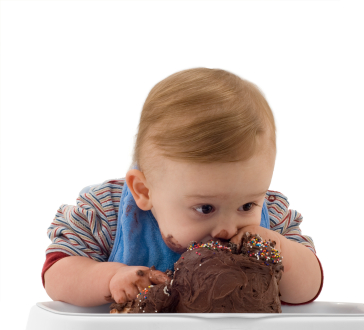
Today is National Sponge Cake Day!
Resources:
Can you think of four popular idioms that use the word, "cake"?
Always the Best Sponge Cake Recipe
Ingredients
4 Eggs, separated
1 cup Sugar
4 Tb Cold water
1 cup Sifted cake flour
1 tsp Baking powder
Whipped cream
Sliced strawberries
Oven Temp ~ 325° Baking Time ~ 30 Min. Pan Type ~ small angel food pan.
Preheat oven, grease a small tube pan.
Beat egg yolks and sugar together until very light. Add water. Sift together flour and baking powder. Add to batter. Beat egg whites until stiff. Fold into batter. Pour batter into prepared pan.
Bake. Cool completely and invert onto cake platter. Prepare whipped cream and strawberries. To serve, slice cake in half and fill with half the whipped cream. Top with remaining whipped cream and strawberries.
Thoughts for writing or discussion:
When does your family use cake? Is it for celebration, or a regular dessert?
Learn the story of Marie Antoinette and Cake. Do you think it's true? Why do you think the commoners were angry?
What are some other uses of the word, "cake" (besides the dessert one)?
Make a cake for someone who's not expecting it, and deliver it!
"Chocolate Cake"
I'm scoffing lots of chocolate cake,
But not quite as much as I'd like!
I'm wolfing it down with a whirl of my spoon,
and it's flinging up, down, left and right!
It's hitting the walls and spraying the floor,
It's covered up Bessie our cat.
There's crumbs in my hair and on mother's best chair,
And the window's one choclatey splat.

But faster and faster I shovel it up,
Not bothered I'm missing my chops.
As it drips from my nose and collects in my ears,
Gloops drop from nose and go plop!
Then too quickly it's gone, there just was not enough,
As I'd said at the start of this smasher,
With my greedy delight (sloppy cake on the lights),
Not one spot found its way past my gnashers!
©2007 Gareth Lancaster [source: http://www.fizzyfunnyfuzzy.com/showpoem.php?poemID=83]
Can you write a cake poem?
What other fun cake plans do you have for today? Share them with us in the comments below.
Also on this date in history...
Recipes for the kitchen-challenged!
(What is a pinch, a skosh, a smidgen, or a dash anyway?)
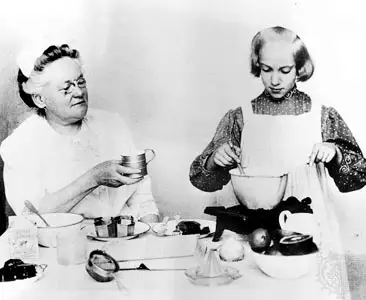
On this day in 1902, pioneering cookbook author Fannie Farmer, who changed the way Americans prepare food by advocating the use of standardized measurements in recipes, opens Miss Farmer's School of Cookery in Boston. In addition to teaching women about cooking, Farmer later educated medical professionals about the importance of proper nutrition for the sick.
Farmer was born March 23, 1857, and raised near Boston, Massachusetts. Her family believed in education for women and Farmer attended Medford High School; however, as a teenager she suffered a paralytic stroke that turned her into a homebound invalid for a period of years. As a result, she was unable to complete high school or attend college and her illness left her with a permanent limp.
When she was in her early 30s, Farmer attended the Boston Cooking School. Founded in 1879, the school promoted a scientific approach to food preparation and trained women to become cooking teachers at a time when their employment opportunities were limited. Farmer graduated from the program in 1889 and in 1891 became the school's principal.
In 1896, she published her first cookbook, The Boston Cooking School Cookbook, which included a wide range of straightforward recipes along with information on cooking and sanitation techniques, household management and nutrition. Farmer's book became a bestseller and revolutionized American cooking through its use of precise measurements, a novel culinary concept at the time.
In 1902, Farmer left the Boston Cooking School and founded Miss Farmer's School of Cookery. In addition to running her school, she traveled to speaking engagements around the U.S. and continued to write cookbooks. In 1904, she published Food and Cookery for the Sick and Convalescent, which provided food recommendations for specific diseases, nutritional information for children and information about the digestive system, among other topics. Farmer's expertise in the areas of nutrition and illness led her to lecture at Harvard Medical School.
Farmer died January 15, 1915, at age 57. After Farmer's death, Alice Bradley, who taught at Miss Farmer's School of Cookery, took over the business and ran it until the mid-1940s. The Fannie Farmer Cookbook is still in print today.
Enjoy this simple project:
How to make your own balance scale!
August 24
1795: Birthdate of William Wilberforce
“You may choose to look the other way but you can never say again that you did not know.”
- William Wilberforce
William Wiberforce was a British philanthropist, politician, and abolitionist. He was a member of parliament who championed causes that supported religion, education and morality. He was a humanitarian reformer, and one of the key characters in the abolition of slavery in England. He is known as a Christian hero, a Statesman-saint and role-model for putting faith into action.
Resources:
Hero for Humanity, Belmonte
The Life of William Wilberforce, by his sons Samuel and Robert Wilberforce
Thomas Clarkson's response to The Life of William Wilberforce
Also on this date:
1997: The clock ran out on Louis Essen.
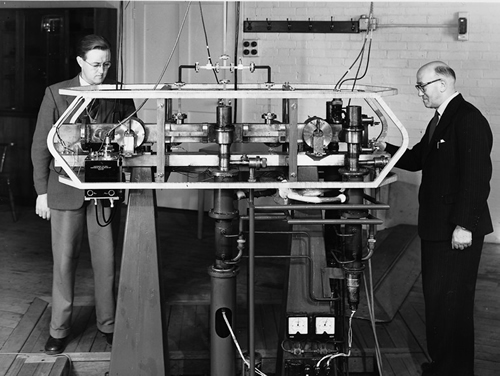
English physicist who invented the quartz crystal ring clock and the first practical atomic clock. These devices were capable of measuring time more accurately than any previous clocks. He built a cesium-beam atomic clock, a device that ultimately changed the way time is measured.
Each chemical element and compound absorbs and emits electromagnetic radiation at its own characteristic frequencies. These resonances are inherently stable over time and space. The cesium atom's natural frequency was formally recognized as the new international unit of time in 1967: the second was defined as exactly 9,192,631,770 oscillations or cycles of the cesium atom's resonant frequency, replacing the old second defined in terms of the Earth's motion.
Resources:
Also on this date:
2006: Pluto is demoted to a "dwarf planet"
Pluto was originally classified as the ninth planet from the sun, but it i was re-categorized because we discovered that is was only one of many bodies of its type--large bodies within the Kuiper belt. It is composed mostly of rock and ice and is about 1/6 the mass of our moon, and 1/3 its volume.
Resources:
Suggested Readings:
August 25
1825: Uruguay declares its independence from Brazil
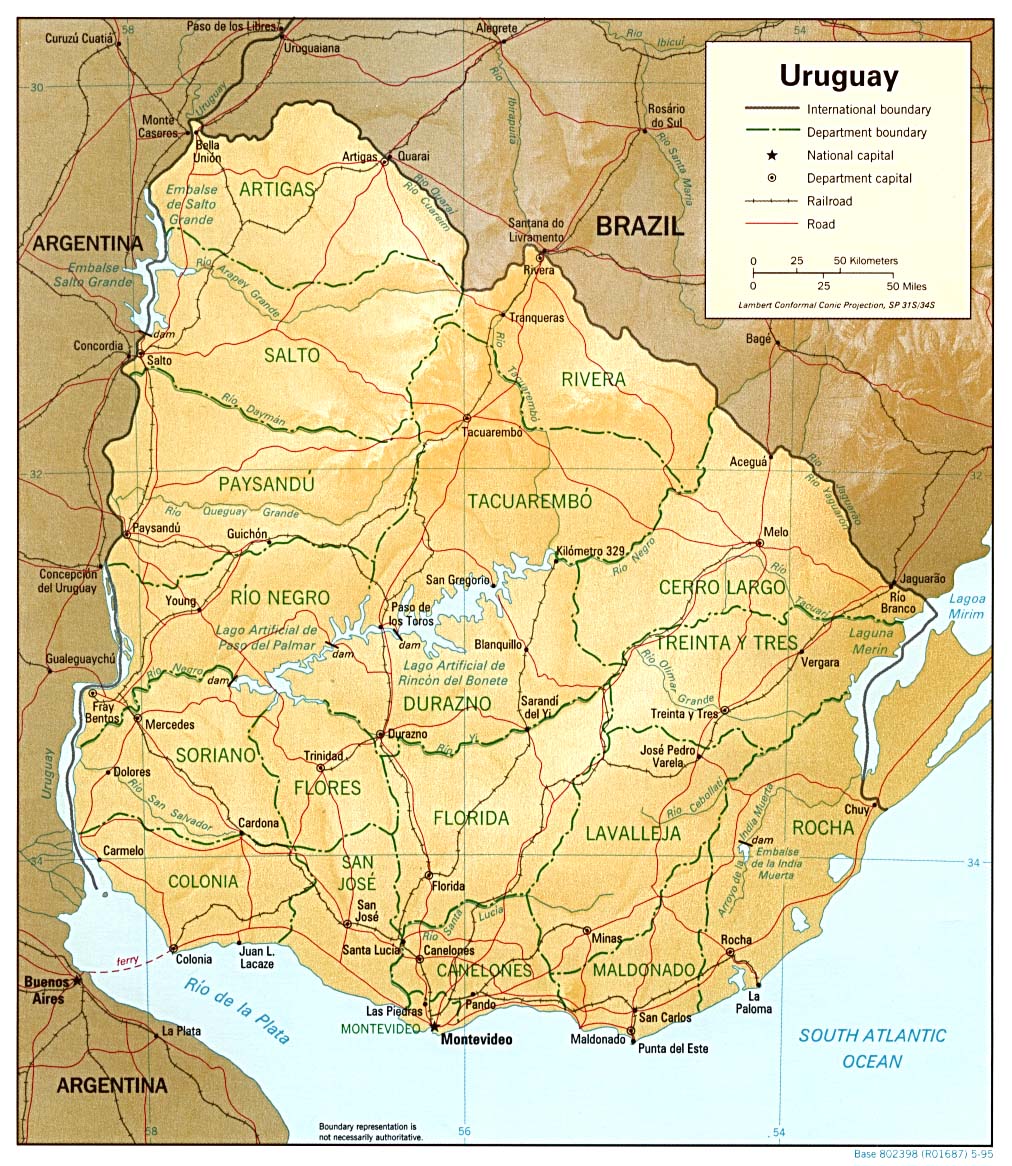
Resources:
Uruguayan Scavenger Hunt
What is the full name of the country?
What is the capitol?
Where did this name come from?
What is the highest point?
How many countries border Uruguay?
What are they?
Answers HERE
Here's some Uruguayan (and Spanish) vocabulary. Find the meaning of:
gaucho
mestizo
mate
chivito
asada
playa
lago
Answers HERE
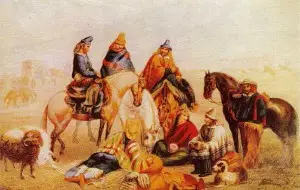
Learn your colors in Spanish today! Remember to RRRRRoll your R's!
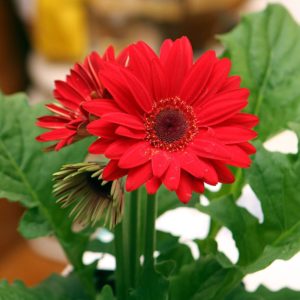
rojo (ROH-hoh)

naranja (nah-RAHN-hah)

amarillo
(ah-mah-REE-yo)
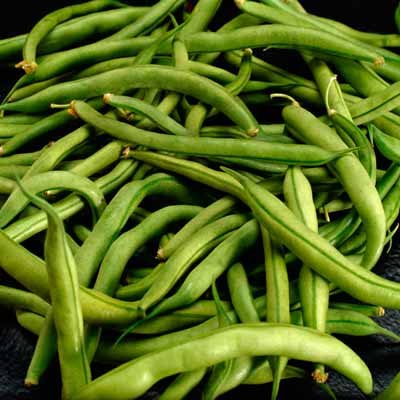
verde (VEHR-day)

azul (ah-SOOL)

morado (moh-RAH-doh)

blanco (BLAHNG-koh)

negro (NEH-groh)

moreno (moh-RAY-noh)
This is a Paragraph Font
Suggested Readings:
Also on this day…
Poem of the Week!
Little Bo Peep
by Mother Goose
Little Bo-Peep has lost her sheep,
And can't tell where to find them;
Leave them alone, and they'll come home,
And bring their tails behind them.
Little Bo-Peep fell fast asleep,
And dreamt she heard them bleating;
But when she awoke, she found it a joke,
For still they all were fleeting.
Then up she took her little crook,
Determined for to find them;
She found them indeed, but it made her heart bleed,
For they'd left all their tails behind 'em!
It happened one day, as Bo-peep did stray
Unto a meadow hard by--
There she espied their tails, side by side,
All hung on a tree to dry.
She heaved a sigh and wiped her eye,
And over the hillocks she raced;
And tried what she could, as a shepherdess should,
That each tail should be properly placed.
August 26
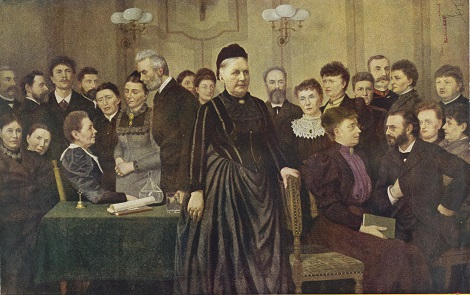
1920: Nineteenth Amendment went into effect, giving women the right to vote
Resources:
What does it mean to live in a democracy?
Why would women ever not have the right to vote?
Who has the right to vote today?
Who does not have that right?
What does it mean to be a citizen?
Why is it important to vote?
Why do you think Effie Hobby has voted in every Presidential election?
How can kids be good citizens?
Vocabulary
Ballot: (1) The piece of paper used to vote. (2) The act of voting.
Citizenship: Having the duties, rights, and privileges of being a citizen of a country
Enfranchise:To give the rights of citizenship to a person or group of people, especially to give that group the right to vote.
Federal: Belonging to the central government of a country as opposed to the local government of a city or state.
Militant: (1) Fighting or making war. (2) Aggressive or combative.
Municipal: Belonging to a city or town.
Petition: (1) An appeal, especially to a person or group in authority. (2) A written document formally requesting a right or benefit from an authority or government.
Picket: A person or group of people standing outside a building to protest.
Provincial: (1) Relating to a province. (2) Not sophisticated or worldly
Suffrage: (1) The right to vote. (2) The act of voting.
[source: Scholastic.com]
Resources:
Does your family every vote on decisions or plans?
Why or why not?
Are there times when certain people don't get to voice an opinion?
Why or why not?
Do the adults in your family get to vote on every decision made by your community leaders?
Why or why not?
What is a "republican" form of government?
What are the advantages of a representative form of government?
What are the disadvantages?
Do your parents vote?
Why or why not?
Suggested Reading:
Also on this date in history...
National Cherry Popsicle Day
It’s National Cherry Popsicle Day! According to legend, an eleven-year-old boy named Frank Epperson accidentally invented the popsicle in 1905. He was stirring up a soft drink when he got distracted and left the cup and the stirring stick out on his front porch overnight. The next morning he discovered a delicious frozen treat with a convenient stick handle!
Nowadays, popsicles are quite a fashionable dessert. Today we celebrate the classic cherry-flavored variety, but that’s just the tip of the iceberg. Gourmet popsicle shops turn out dozens of unique flavors—avocado, hibiscus, chai, cranberry cosmopolitan, cucumber-jalapeño, and many more.
To celebrate National Cherry Popsicle Day, make your own homemade popsicles! Team up with some friends to invent a totally unique flavor or put a twist on a classic.
Resources:
Popsicles can be simple or gourmet, straight-forward or elaborate. Freeze some Koolaid, a smoothie, or blend up a concoction! This is a time when kids can really be creative with the blender and try out some healthy and refreshing stuff of their own! Don't be afraid to be a little adventurous - stirring in chunks, bits of mint, lime juice, carbonated drinks, ...whatever!!
Also on this day…
Super Summer!
Hobbies are a great way to learn! What are some of your favorite hobbies?
Landscaping!
Resources:

August 27
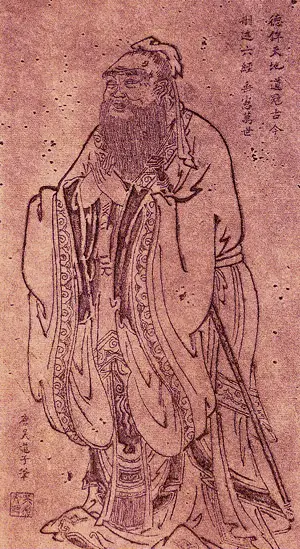
552 B.C.: Birthdate of Confucius
Confucius, an ancient Chinese philosopher, devoted many years to thinking about and studying humans, their place in the universe, and his relationship to them. As a young man he organized a school where others could study academic subjects as well as examine duty, love, manners and how they relate to human life.
Some of Confucius’ thoughts are embodied in his oft-quoted “sayings,” such as “The superior man understands what is right; the inferior man understands what is profitable.” Confucius’ real name was K’ung Ch’iu. Confucius is a Latin form of the title K’ung-fu-tzu, which means Great Master K’ung.
Although Confucius received some minor official appointments during his lifetime, at the time of his death he was largely unknown throughout China. His disciples spread his teachings. None of his writings were preserved, but his conversations and sayings were compiled by his followers in a book titled The Analects.
Resources:
Quotes from Confucius for Writing or Discussion:
Be not ashamed of mistakes and thus make them crimes.
Before you embark on a journey of revenge, dig two graves.
Forget injuries, never forget kindnesses.
I hear and I forget. I see and I remember. I do and I understand.
Men's natures are alike, it is their habits that carry them far apart.
Study the past if you would define the future.
Can you write a little maxim of wisdom like Confucius?
Also on this date in history:
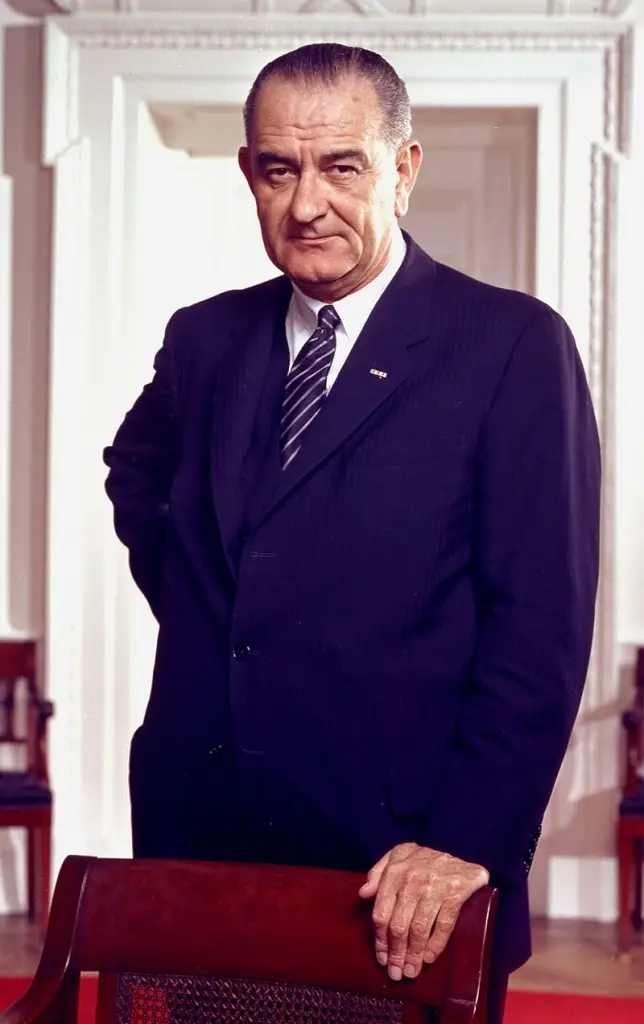
1908: Birthdate of Lyndon Baines Johnson, Thirty-eighth President of the United States of America
Born in: Stonewall, Texas
Occupation: Congressman, senator, rancher President: 1963-1969, Democrat
Died: Johnson City, Texas
About Johnson
Texas ranch background
Elementary school teacher
First congressman to enter the armed forces in World War II
Senate Majority Leader
Elected vice-president and became president when John F. Kennedy was assassinated.
During His Terms
The 1964 Civil Rights Bill outlawed racial discrimination in public accommodations and employment
Won the 1964 election against Senator Barry Goldwater by the largest number of popular votes ever
“Great Society” program of social legislation: Job Corps, Medicare, Voting Rights Bill, aid to education
Appointed first African-American cabinet member, Robert Weaver, Department of Housing and Urban Development, and first African-American Supreme Court Justice, Thurgood Marshall
The Vietnam War escalated during his terms—with mounting casualties and costs
Resources:
Coloring Page: LBJ taking the oath of office on Air Force One.
Check It Out!
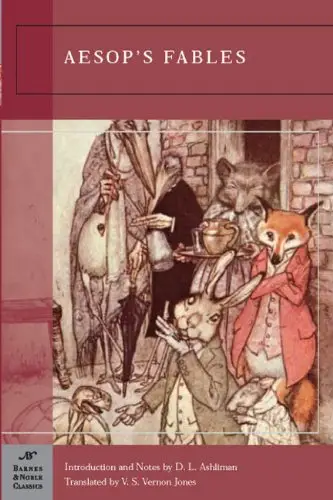
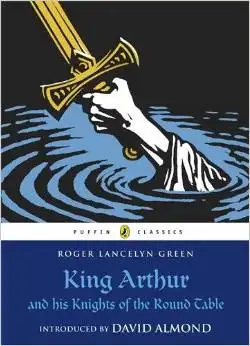
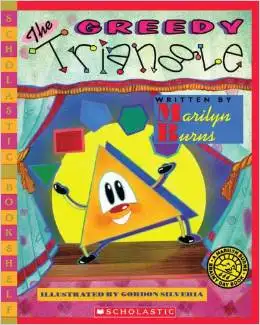
What are some of your favorite books? Do you like different books for reading alone than for reading with your family?
August 28
1963: March on Washington, D.C

More than 200,000 Americans marched in Washington, D.C. and gathered in front of the Lincoln Memorial to tell the world they wanted liberty, freedom, and justice for all. This date was one of the most significant in the history of the civil rights struggle in America. Among the leaders of the march were Jesse Jackson and the Reverend Dr. Martin Luther King, Jr., who addressed the crowd with the now historic speech that began with the words, “I have a dream . . .” and ended with:
When we allow freedom to ring—when we let it ring from every village and from every hamlet, from every state and every city, we will be able to speed up that day when all of God’s children, black men and white men, Jews and Gentiles, Protestants and Catholics, will be able to join hands and sing the words of the old Negro spiritual: “Free at last, Free at last! Thank God Almighty, we are free at last.”
Resources:
In 2009 there was a "Freedom March" in Iran. Find out about it. What happened, and why? What was the result?
Can you discover other freedom marches?
What is the appropriate use of protest in a society?
What are some historical examples of protests done in an effective and principles manner?
What are some examples of protests that were ineffective? Wrong?
Does your family have a mechanism for protest? Why or why not?
Do you think that there is a group in society today that should stage a march on Washington? Who/why? Do you think the current administration would react favorably or not?
The United States of American was founded with a core value that the citizens have the right to protest. This is something that is often taken for granted in free societies around the world. What are the consequences of protesting in a regime that does not allow this?
What examples can you give of such happenings?
Suggested Readings:
Also on this date in history...
Asteroid's Moon

In 1993, a picture was taken showing the first moon of an asteroid. The asteroid 243 Ida and its newly-discovered moon, Dactyl was imaged by NASA's Galileo spacecraft, about 14 minutes before its closest approach (within 2,400-km or 1,500 miles) to the asteroid. Ida is about 52 km (32 mi) in length and is irregularly shaped. It shows numerous craters, including many degraded craters, indicating Ida's surface is older than previously thought.
Dactyl is only about 1.4-km in diameter, and it is spectrally different from Ida data. The picture was released on 26 Mar 1994. Galileo had encountered the first asteroid - 951 Gaspra - on 29 Oct 1991. Galileo continued on its mission to study Jupiter, beginning its orbit of the planet on 7 Dec 1995.
Resources:
Normally we talk about "the" moon, and we're referring to that lovely soft light in the night, and the friendly face in the sky in the day. But ours is not the only moon in the universe, and it's actually a technical designation, and not just the name for "our" satellite...

More about Ida and Dactyl for science geeks:
Open Issues that scientists are still considering:
What is Ida's chemical composition?
How old are Ida and Dactyl?
Galileo didn't get very good measurements of Dactyl's orbit; how can we improve them?
August 29
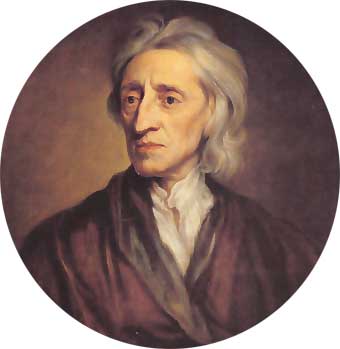
1632: John Locke was born.
John Locke was an English physician who was the most important philosopher during the Age of Reason. He spent over 20 years developing the ideas he published in most significant work, An Essay Concerning Human Understanding (1690) which analyzed the nature of human reason, and promoted experimentation as the basis of knowledge.
He established primary qualities, (ex. solidity, extension, number) as distinct from secondary qualities identified by the sense organs (ex. color, sound). Thus the world is otherwise silent and without color. Locke recognized that science is made possible when the primary world mechanically affects the sense organs, thereby creating ideas that faithfully represent reality.
Resources:
Quotes for Writing or Discussion:
All wealth is the product of labor.
An excellent man, like precious metal, is in every way invariable; A villain, like the beams of a balance, is always varying, upwards and downwards.
As people are walking all the time, in the same spot, a path appears.
Education begins the gentleman, but reading, good company and reflection must finish him.
Fashion for the most part is nothing but the ostentation of riches.
Fortitude is the guard and support of the other virtues.
Government has no other end, but the preservation of property.
I attribute the little I know to my not having been ashamed to ask for information, and to my rule of conversing with all descriptions of men on those topics that form their own peculiar professions and pursuits.
I have always thought the actions of men the best interpreters of their thoughts.
It is easier for a tutor to command than to teach.
It is of great use to the sailor to know the length of his line, though he cannot with it fathom all the depths of the ocean.
It is one thing to show a man that he is in an error, and another to put him in possession of the truth.
New opinions are always suspected, and usually opposed, without any other reason but because they are not already common.
No man's knowledge here can go beyond his experience.
Reading furnishes the mind only with materials of knowledge; it is thinking that makes what we read ours.
The end of law is not to abolish or restrain, but to preserve and enlarge freedom. For in all the states of created beings capable of law, where there is no law, there is no freedom.
The improvement of understanding is for two ends: first, our own increase of knowledge; secondly, to enable us to deliver that knowledge to others.
There is frequently more to be learned from the unexpected questions of a child than the discourses of men.
To love our neighbor as ourselves is such a truth for regulating human society, that by that alone one might determine all the cases in social morality.
To prejudge other men's notions before we have looked into them is not to show their darkness but to put out our own eyes.
We are like chameleons, we take our hue and the color of our moral character, from those who are around us.
We should have a great fewer disputes in the world if words were taken for what they are, the signs of our ideas only, and not for things themselves.
What worries you, masters you.
Suggested Readings:
Also on this date in history...
BIZZARE AUGUST HOLIDAYS:
"More Herbs, Less Salt" Day
I love this "holiday"! Most people with a finger on the pulse of their health agree that abusing salt in your diet can aggravate many health problems. And using naturally flavorful herbs to enhance our enjoyment of our foods is not only healthy, but super-yummy!!
If you're a "foodie", you require no convincing. If you're not, you might have felt intimidated by the use of herbs -- not sure what works, worried about making a mistake. Introducing cooking herbs into your diet is really a fun and "classical" project, as it yields something new every time you do it. Kids really love cooking. And just think about the possibilities! Science, art, history, geography, math and eating put together: how cool is that?
So let's spread our wings a little and experience the joy of cooking with herbs...

Resources:
What about the positive uses of salt?


About
Mentoring
Connect & Resources
© 2026 Leadership Education | TJEd